

In a slightly dubious play on words, I’m currently working on a new bellows-powered project: a bellowing stag. Bellow-ing, get it? I haven’t yet decided whether it should be a bellowing stag, a moose or, given the approaching festive season, a bellowing reindeer. Here’s the original sketch that’s serving as my starting point. As the bellows beneath the character are pumped, the reindeer arches its head and neck to let out a silent roar.
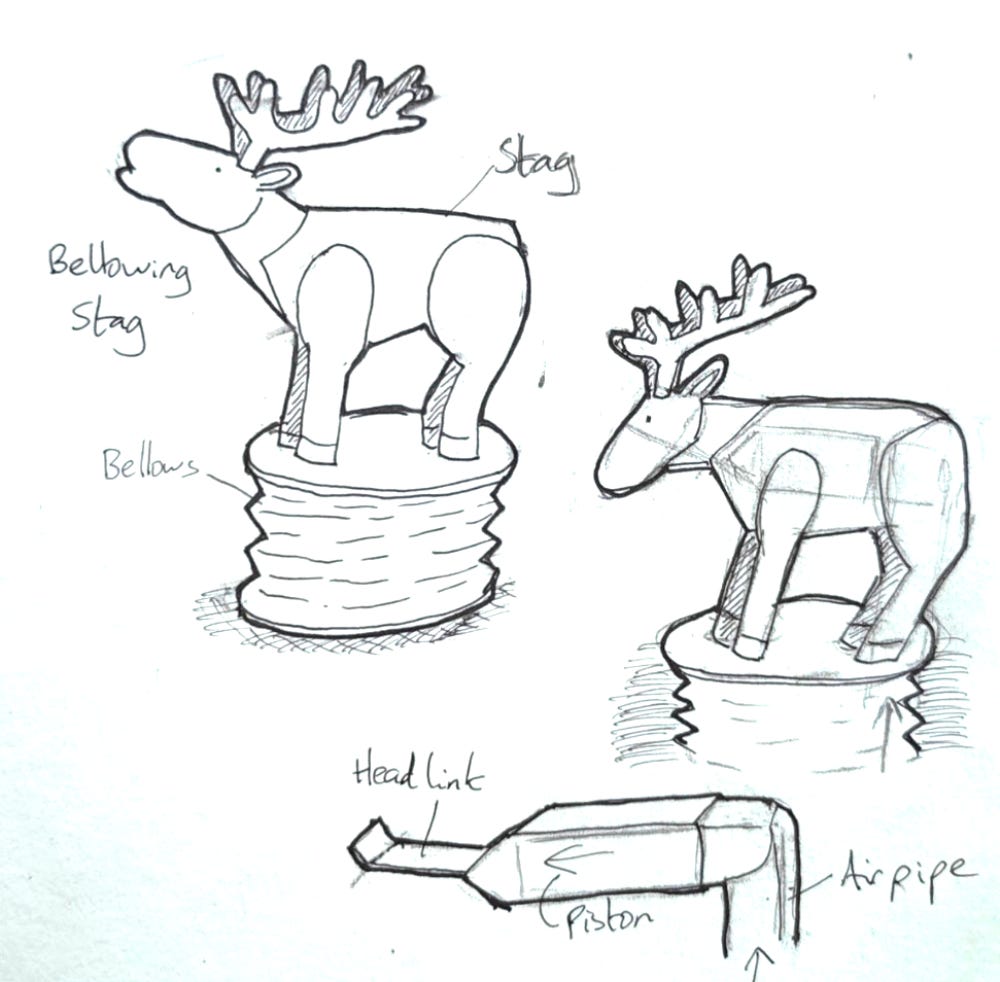
I’m currently working on my second prototype. This version is twenty per cent larger than the first, providing a little more room for the linkages and mechanisms.
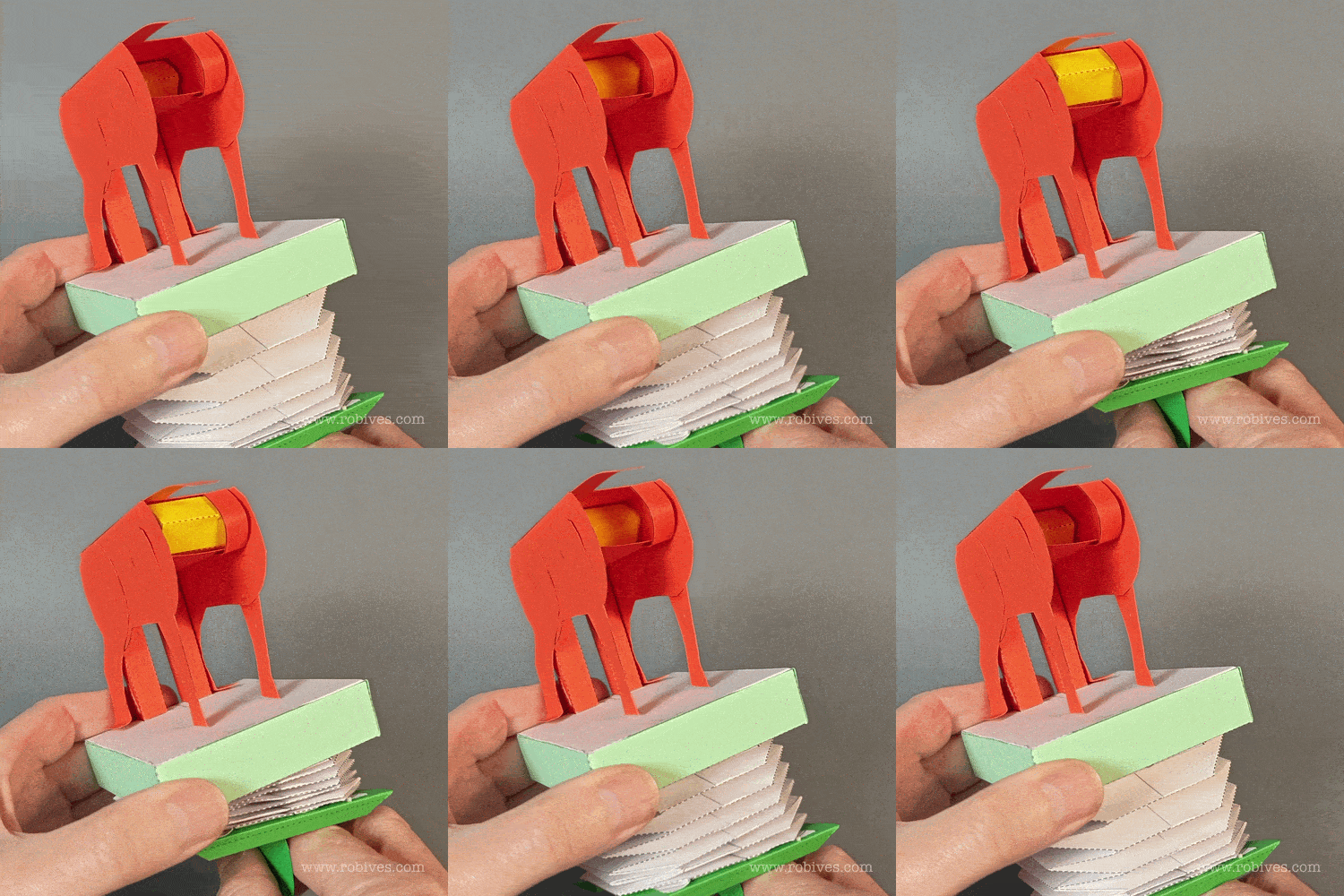
The reindeer stands on top of an air box. Its hollow rear legs pass through holes in the top panel of the box. Air from the bellows is pumped into the box, directed up inside the legs and out through a tube running the length of the body. The air drives the yellow piston back and forth. This will be the drive point to move the head and neck.
The aim is to create a movement similar to the animation below so that the neck drops and the head lifts slightly. If all goes to plan, I’ll also be able to fit an opening mouth inside the head, giving the impression that the reindeer is roaring as it moves.
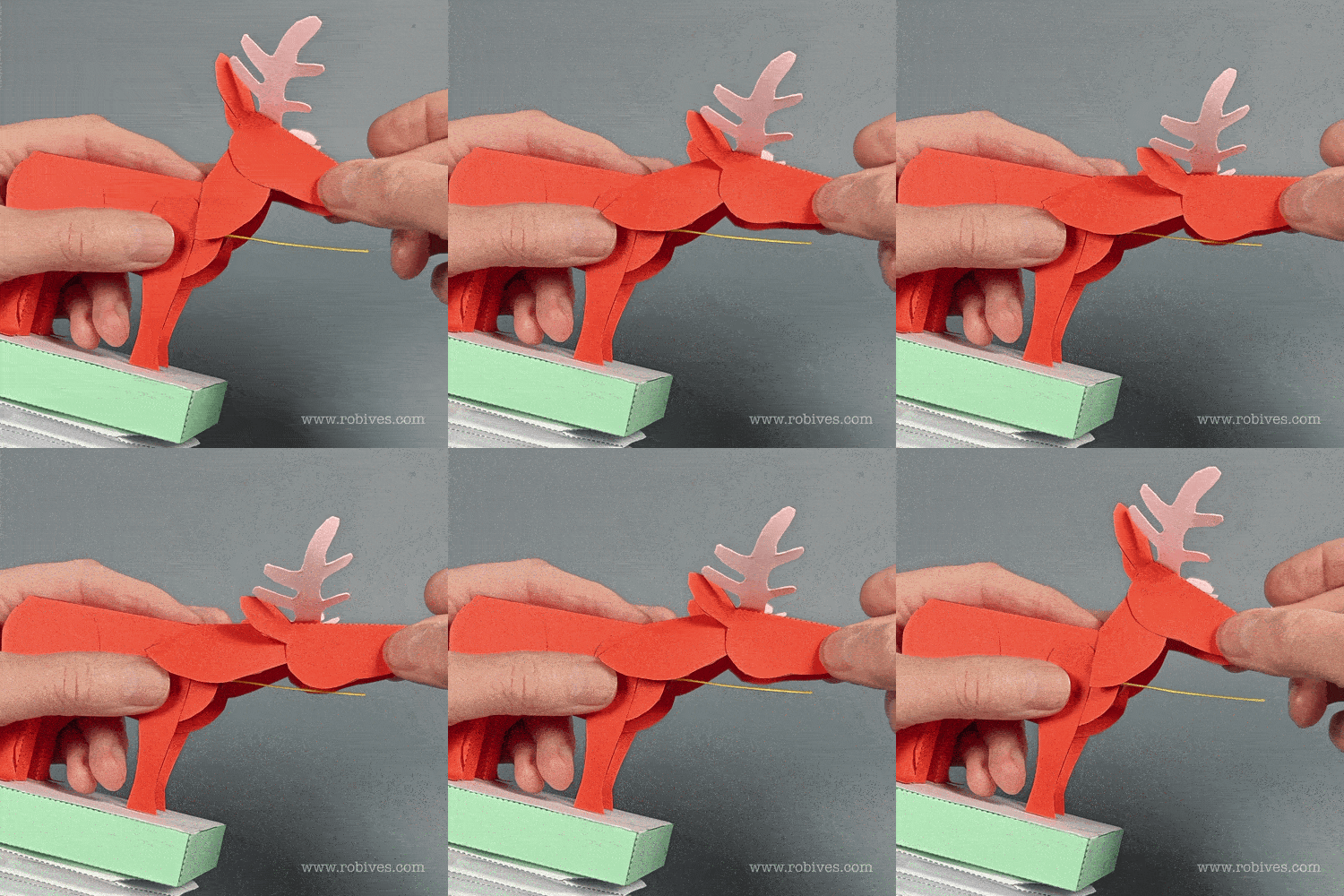
The neck in the animation above isn’t actually glued in place. The fingers of my left hand are holding the tab in position, letting me make small adjustments while I test different movements. I spent a fair bit of time moving the head and neck around, experimenting with ways of linking the mechanism together. As I moved the parts I was thinking through how an opening mouth might be incorporated into the design.
After unsuccessfully trying to visualise how the mouth mechanism might work, I decided to go back to basics and build a larger version from corrugated card and split pins. This let me test the idea in real life. I started by scaling up the parts to twice the original size. This gave me plenty of room to make adjustments and fit the split-pin joints.
For the head movement I settled on a four-bar linkage. The pivot points on the right-hand side that are connected to the head, are closer together than those on the left, connected to the body. As a result, when the neck lowers, the head tilts upwards, just as I had hoped.
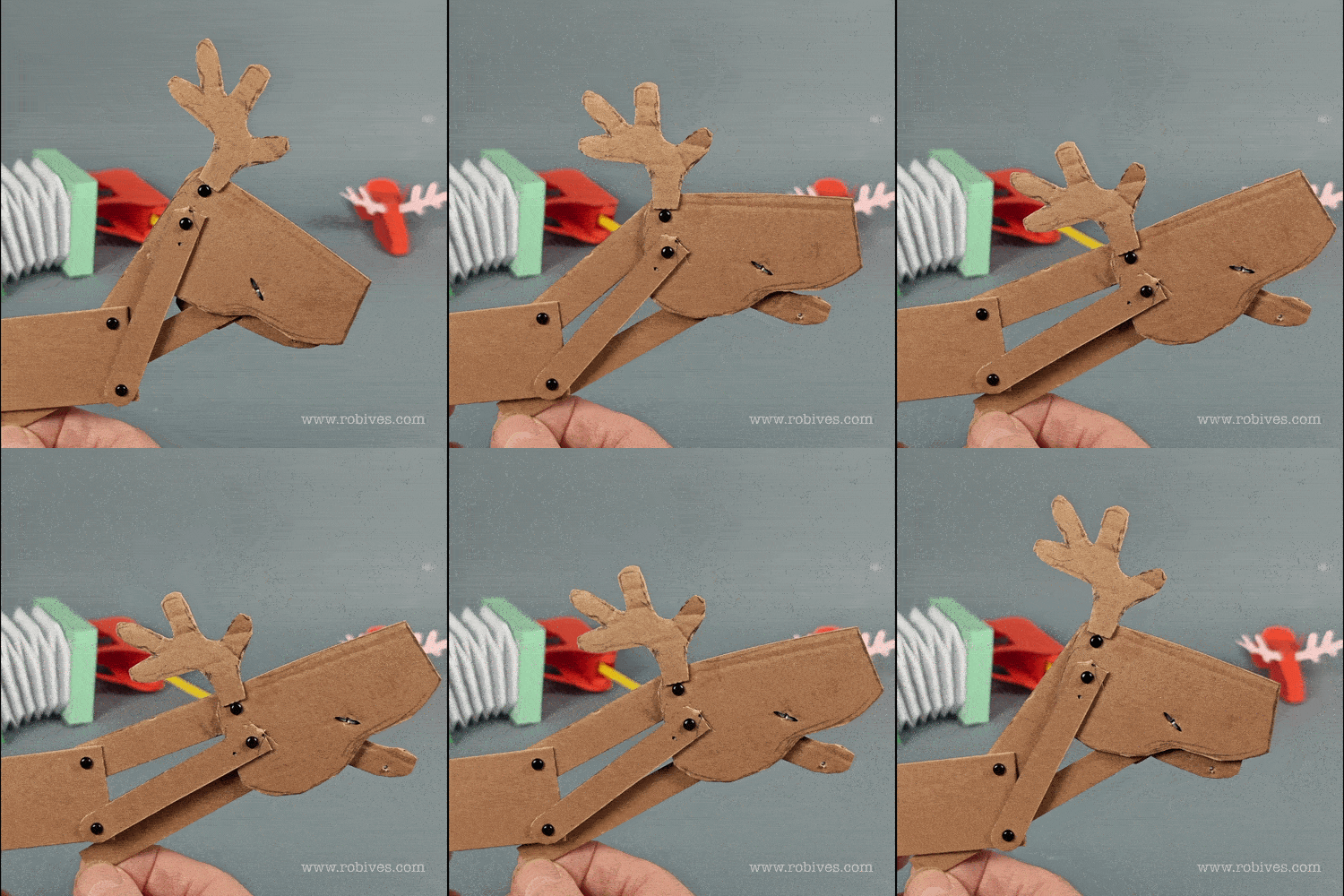
I tried several different ways of linking the mouth movement into the mechanism before realising that I could simply attach a mouth directly to the push rod, making everything much simpler.
I’m really pleased with how that mechanism has turned out. The head arches and stretches just as I’d hoped, and the mouth movement comes naturally as part of the action, without the need for any additional complicated linkages.
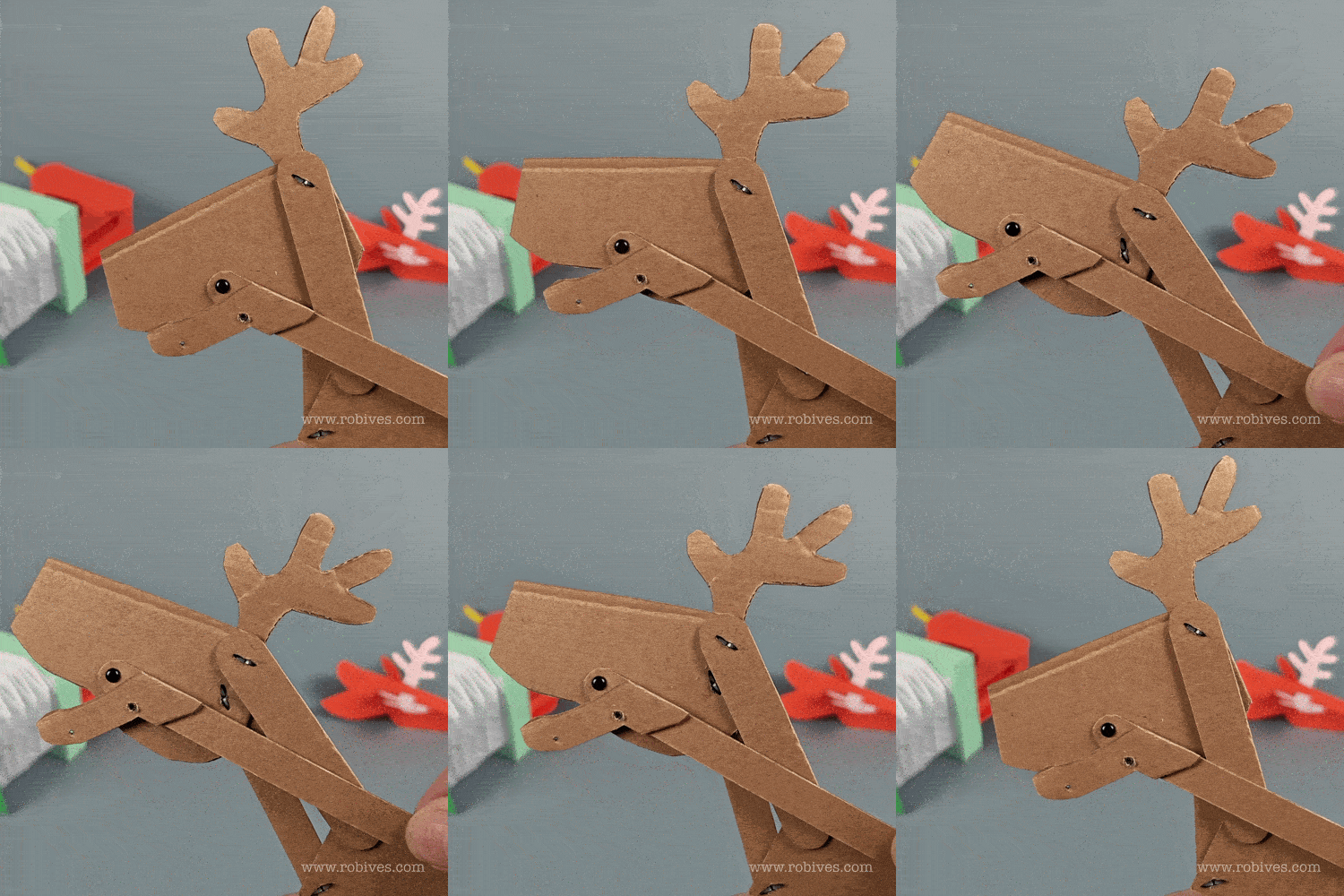
The next step will be to translate the corrugated card and split-pin mechanism into a more compact, fully three-dimensional version. I’ll replace the split pins with paper hinges and connect the push rod to the piston in the reindeer body. There’s still plenty to work out, but it should be fun!
Thanks for reading and following along with the development of this bellowing reindeer.
If you’d like to see how the project develops, be sure to come back for the next update when I aim to have the finished design moving as planned.
And if you’d like to be ready to download the completed project as soon as it’s released, please consider signing up for a premium membership. Your support helps me continue developing new projects and sharing them here on Workshop Notes
Until next time, have a fun, creative and wonderfully inventive week!
Rob
Hi Rob, I am about to reinstated my past subscription next December or early January 2027.
Best Regards
Mario J. MARTINEZ
mario.juvenal@yahoo.com