

I’m a bit of a fan of the Geneva drive mechanism. There’s something wonderfully elegant about the way it takes smooth rotary motion and chops it into discrete steps. A steady turn of the crank becomes a turn‑pause‑turn‑pause rhythm in the output axle. Named for the city where it was first developed, the Geneva drive has played, and still plays, an important role in watch and clockmaking. It also feels like exactly the sort of mechanism that deserves a playful paper‑engineered reimagining.

This isn’t my first Geneva drive, you might remember the Bunny Vision project from the back catalogue of these newsletters. This new version works a little differently. Instead of a single drive pin, it uses two, one on each side of the drive wheel. That means every turn of the crank advances the index wheel twice, giving you two neat quarter‑turn steps per rotation.
The project comes as a downloadable PDF, ready for you to print at home. If you’re a premium subscriber, the file is waiting for you at the foot of this page, thank you, as always, for your support. If you haven’t subscribed yet, you can still join the fun by downloading the project from www.robives.com for £5 or equivalent.

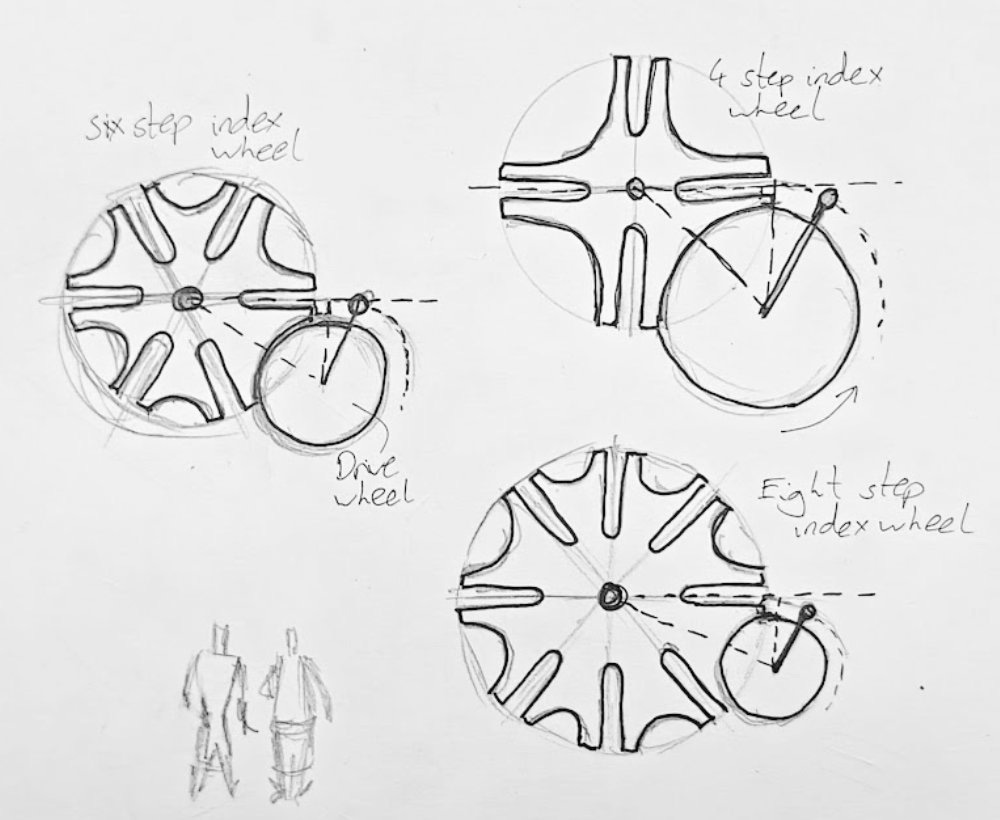
There are plenty of other variations of the Geneva drive worth exploring, and I’m sure I’ll return to them before too long. By changing the relative sizes of the drive wheel and the index wheel, you can alter the number of steps the mechanism produces. A ten‑slot wheel, for example, could be the starting point for a multi‑digit counter, and that sounds like a fun project to me.
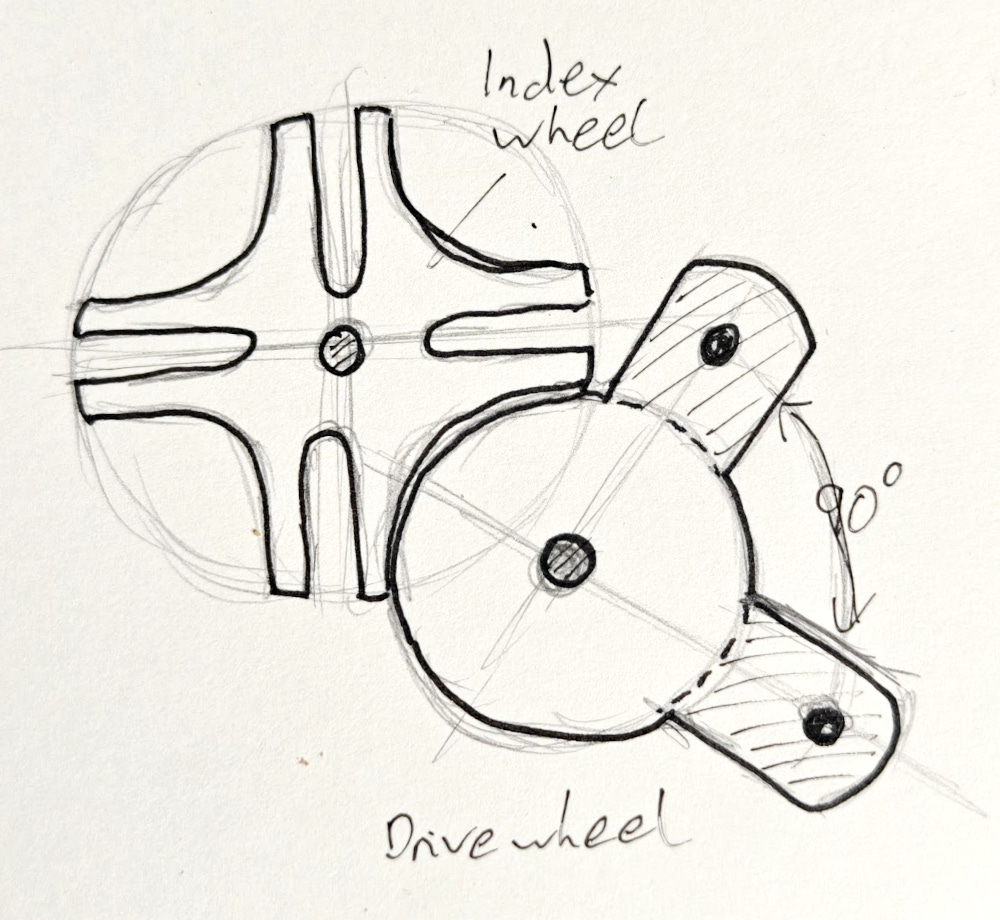
It might also be interesting to play with the angle between the two drive pins. Shift them to ninety degrees apart instead of one‑eighty and the index wheel gives you two quick movements followed by a longer pause, a different rhythm, a different kind of breath in the mechanism. Little changes like that can completely alter the feel of the motion, which is part of the joy of these explorations.
In the end, this mechanism isn’t a final destination so much as a waypoint, a starting point on a longer mechanical journey, an invitation to see how far paper can move when you give it the chance.
Just one more thing before I wrap up. I’d originally planned to create an animated GIF of the Geneva mechanism, but the video turned out to be clear enough on its own. The real challenge, though, was that I’m trying to ease myself away from Adobe software. They once felt like a company led by artists building tools for artists; now they feel more like a corporate behemoth determined to extract every last ounce of value from their users. So I’ve stepped away from Illustrator and Photoshop in favour of the Affinity suite — and I may well take another step toward Inkscape and GIMP. There’s something appealing about working entirely with open‑source tools, especially for a project rooted in curiosity and shared making.
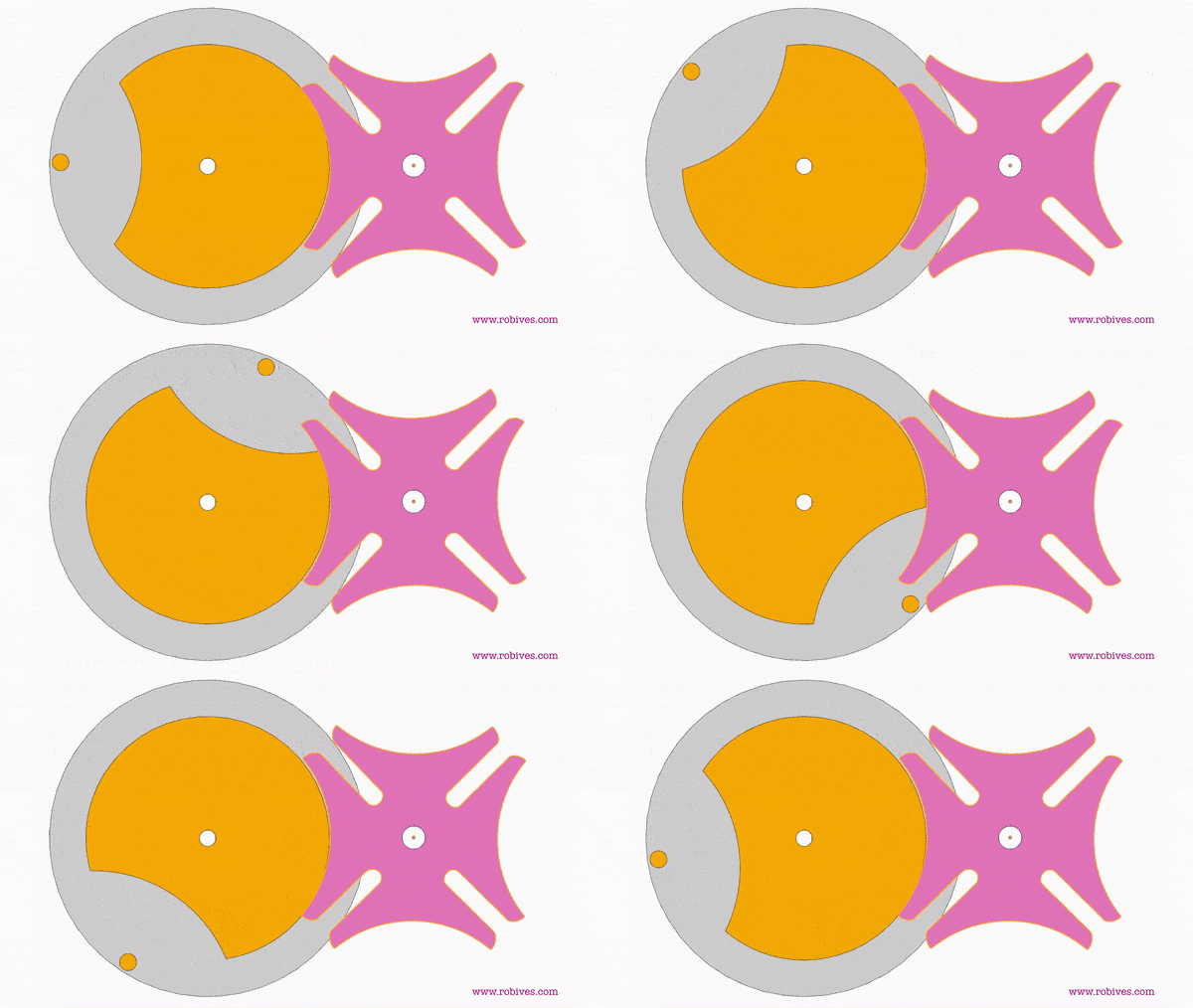
DaVinci Resolve has already replaced Premiere for my video editing, but that still left a gap where Adobe Animate used to sit, the tool I’d reach for when I needed a simple mechanism animation for the newsletter or the website. I think I may have found a new path, though. This Geneva drive animation was created in Blender, that remarkable open‑source powerhouse more often associated with 3D modelling. And you know what? It worked beautifully. It feels like I might be onto something, another small step in this ongoing journey to make things with tools that feel aligned with the spirit of the work.
Thanks, as always, for reading. I hope you’ve found this little exploration of the Geneva drive as interesting and enjoyable as I did while making it. If you’d like to dive deeper into projects like this, most newsletters come with a downloadable build for premium members, and if you choose the annual option rather than the monthly, you’ll also receive free full membership on robives.com. It’s a lovely way to support the work and unlock a whole library of paper‑powered curiosities.